|
Rav Richard 'Aharon' Chaimberlin |
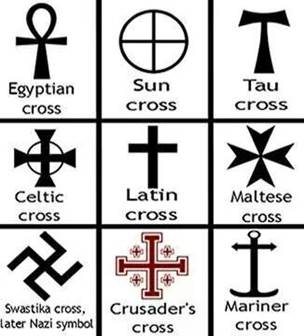
 As a religious symbol, the cross
predates Christianity by about 2000 years. Perhaps the first people to use the
cross were the Babylonians of Chaldes about 4000 years ago. They used the Tau,
shaped much like a "T" representing their god, Tammuz, according to
Vine's Dictionary of the New Testament. The Egyptian ankh, shaped much
like a modern cross, is found on the walls of nearly all ancient Egyptian
monuments and temples. The cross is found on Chinese pagodas. The Buddhists of
India mark their followers on the forehead with the sign of the cross. The Muslim
Kabyle women of Africa have tattooed crosses between their eyes.
As a religious symbol, the cross
predates Christianity by about 2000 years. Perhaps the first people to use the
cross were the Babylonians of Chaldes about 4000 years ago. They used the Tau,
shaped much like a "T" representing their god, Tammuz, according to
Vine's Dictionary of the New Testament. The Egyptian ankh, shaped much
like a modern cross, is found on the walls of nearly all ancient Egyptian
monuments and temples. The cross is found on Chinese pagodas. The Buddhists of
India mark their followers on the forehead with the sign of the cross. The Muslim
Kabyle women of Africa have tattooed crosses between their eyes.
Indigenous peoples ("Indians") in Mexico used the cross as a sacred symbol centuries before they were "discovered" by the Spaniards. The Cuma Indians used the symbol that Europeans call "St. Andrew's Cross" as an amulet to protect them from evil spirits. The same symbol was used on the coins of Alexander Bala in Syria in 146 BCE[1] and by Baktrian kings from 140 to 120 BCE, long before St. Andrew was even born! The Vestal Virgins of ancient Rome wore crosses dangling from their necks. The cross was also used by the Greeks centuries before Yeshua.[2]
 Many
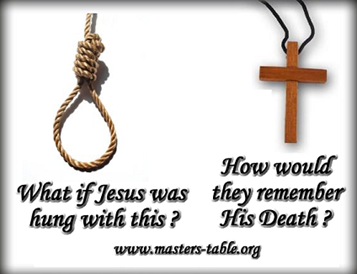
people feel that because Jesus (Yeshua) died on a cross, therefore the cross is
now a good Christian symbol. Some even sing a song, where they "cherish
the old rugged cross." I wonder: If our Messiah had been killed by a gun,
would we "cherish the old rusty shotgun"? Would we be carrying the image
of a gun from our necks? Would churches construct giant concrete guns in front
of their buildings? (It's getting a little bit ridiculous, isn't it?) I am
grateful that our Messiah was willing to be crucified to pay the penalty for
our sins. He is the one I cherish, not that ugly wooden cross on which
He was impaled. If I had a piece of that ancient cross, I would probably burn
it before someone decided to worship it or display it as a "sacred
relic."
Many
people feel that because Jesus (Yeshua) died on a cross, therefore the cross is
now a good Christian symbol. Some even sing a song, where they "cherish
the old rugged cross." I wonder: If our Messiah had been killed by a gun,
would we "cherish the old rusty shotgun"? Would we be carrying the image
of a gun from our necks? Would churches construct giant concrete guns in front
of their buildings? (It's getting a little bit ridiculous, isn't it?) I am
grateful that our Messiah was willing to be crucified to pay the penalty for
our sins. He is the one I cherish, not that ugly wooden cross on which
He was impaled. If I had a piece of that ancient cross, I would probably burn
it before someone decided to worship it or display it as a "sacred
relic."
The writer of Hebrews tells us that we should fix our eyes on Yeshua, "the author and finisher of our faith, who for the joy set before Him endured the cross, despising the shame, and has sat down at the right hand of the throne of God." [3] The important thing isn't that piece of wood, but who it was that died for our sins on that cursed piece of wood.
There are various ideas of what the "cross" looked like. The Greek word for cross is stauros, which (accord-ing to Vine) simply means an upright stake in the ground. However, Thomas refers to the "imprint of the nails" in his hands (John 20:25), which seems to indicate a cross piece, which was probably laid upon the upright stake. With only a vertical stake, only one nail would have been sufficient for both hands. When the sign was placed above his head (Luke 23:28), the overall image would be close to what most people think of when they envision the "cross."
Historically, the first use of the cross as a "Christian" religious symbol was in 431 CE (AD), according to Harper's Book of Facts. The first use of a cross on a steeple was in 586 CE.[4] The early believers of the First and Second Centuries never used the cross as a religious symbol. I believe that the use of a cross as a sacred symbol would have horrified them! Some historians believe that Emperor Constantine of Rome initiated the first use of the cross, about a century before Harper mentions the first use of the cross as a Christian symbol.
 According to the early
church historian Eusebius, Constantine had a vision of the cross, with the
words, "In this sign, conquer." The cross was more of a military
symbol. Christians believe this is a testimony of Constantine's
"conversion." However, even after his "conversion," the
Emperor was still a murderer. He killed two of his wives, two of his sons, his
brother-in-law, and his nephew. The historian Durant believes his
"conversion" was merely one of political expediency. Constantine used
Christianity as a means of unifying his empire. It did not bother him to mix
Christianity with paganism. He continued to honor the sun-god even after his
supposed conversion. When he dedicated Constantinople in 330 CE, the chariot of
the sun-god was set in the marketplace, and over it was the cross. Images of
the sun deity continued to be embossed on Roman coins. The sacred day of the
sun god (Sunday, of course) was made the law of the land, replacing the
Biblical Shabbat (Sabbath). It did not bother Constantine to take a pagan
symbol like the cross and "Christianize" it.
According to the early
church historian Eusebius, Constantine had a vision of the cross, with the
words, "In this sign, conquer." The cross was more of a military
symbol. Christians believe this is a testimony of Constantine's
"conversion." However, even after his "conversion," the
Emperor was still a murderer. He killed two of his wives, two of his sons, his
brother-in-law, and his nephew. The historian Durant believes his
"conversion" was merely one of political expediency. Constantine used
Christianity as a means of unifying his empire. It did not bother him to mix
Christianity with paganism. He continued to honor the sun-god even after his
supposed conversion. When he dedicated Constantinople in 330 CE, the chariot of
the sun-god was set in the marketplace, and over it was the cross. Images of
the sun deity continued to be embossed on Roman coins. The sacred day of the
sun god (Sunday, of course) was made the law of the land, replacing the
Biblical Shabbat (Sabbath). It did not bother Constantine to take a pagan
symbol like the cross and "Christianize" it.
The cross was used as an instrument of persecution and torture by pagan Rome, used especially against Jews in Israel, long before Constantine came along. Yeshua was just one of many thousands of Jews who were crucified by pagan Roman soldiers. After Rome's "conversion," the cross continued to be used as an instrument of persecution by Christian Europe against Jews. Priests carrying large crosses often led howling mobs who looted and destroyed Jewish communities throughout Europe.
Crusaders on their way to the Holy Land from 1096 to approximately 1291 often robbed, raped, and murdered Jewish communities that they met along the way. A Catholic priest carrying a large wooden cross led a band of Crusaders in Jerusalem. The Jews of Jerusalem fled for sanctuary to the Beit Knesset HaGadol ("The Great Synagogue"). The priest and the Crusading army marched around the synagogue and the Jews seeking safety inside the synagogue. The Crusaders set fire to the synagogue, while singing, "Christ, we adore Thee," as the Jews inside burned to death. The Crusaders also committed many crimes against Muslims as well as Byzantine Christians and other minorities. Both Muslims and Jews agree on this: "Crusade is not a nice word.
Even in the USA, Jewish children have been forced to kiss the crucifix by Gentile bullies. It is easy to see why most Jews are not impressed by the crucifix, which is so often associated with persecution and violence.
For more information, I recommend reading Alexander Hislop's Two Babylons, Ralph Woodrow's Babylon Mystery Religion, The Anguish of the Jews by Father Edward Flannery, and Our Hands Are Stained With Blood by Dr. Michael Brown. You could also do an internet search for more information and additional books.